Subscriptions

Does Life Exist Elsewhere?


Whatever happened with that news last year about finding life on Venus? Something about phosphine, whatever that is.

And what about the cigar-shaped space rock with the unusual name (Oumuamua) they found in 2017 and called an “interstellar visitor”? Aliens, right? Where’s the follow-up on that?

The shortest, simplest answer to both these versions of the Big Question is that scientists are working on it.

Their scientific method is a very useful tool for getting to the root of things, but it takes time. Too, jargon and the technical details involved do not make for reader-friendly stories.

That’s why journalists usually wait for results to be announced in simple language.

Many years can pass in between press conferences. And sometimes other research teams come up with different results in the meantime, which the journalists also must report.

“…the launching of this ‘bottle’ into the cosmic ‘ocean’ says something very hopeful about life on this planet.” — Carl Sagan via Wikipedia.

This extended, open-ended process generally leaves us laypeople feeling confused and a little put off by Science — except when the topic is “Life Out There.”

THAT always gets our attention.

It appeals to our gut feeling that, if humanity keeps searching long enough, we’ll find ET someday, looking back at us and glad to discover that it’s not alone in this huge universe.

Is that a valid hope or are we just projecting our social selves onto the cosmos?

Alien life isn’t impossible

I’ve found out something cool while reading through the sources for this chapter of the series on how cats evolved.

Continue reading “Does Life Exist Elsewhere?”

What Is Life?


Trigger warning for people who have been traumatized by or become anxious around animals.


Adalbert Dragon/Shutterstock

Life is incredibly precious, you realize seconds after meeting a cat like this and knowing that you might come out on the losing end here.

The usual way we see our lives — as something to get through each day — evaporates under this jaguar’s frank stare.

Welcome to the food chain, pal!

Like it or not, you and I are part of the great web of life.

Individually and as groups, we try to avoid the scary and unpleasant parts by insulating ourselves from Nature as much as possible. This often works, too.

However, Nature is bigger than us. Bottom line: like any other species, H. sapiens eats and can be eaten.

Now for the good news.

“Cave lions suck!” “Bears, too! — Prehistoric people. (Image:
EOL, CC 2.0)

Human beings have been dealing successfully with predators like this jaguar and even worse for hundreds of millennia.

The survivors of such encounters have passed along to us a built-in emergency mode that gives our famously big brains a chance to think their way through a crisis.

Continue reading “What Is Life?”

Time: Human vs. Geological


Life on Earth is strange, and I don’t just mean physically. It’s odd how life goes on here.

In terms of time, we are so out of sync with our planet!

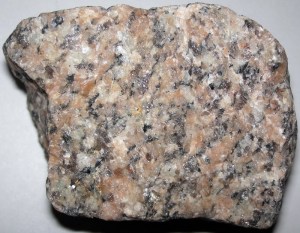
About 75% of the Earth’s outer crust, where we live, is composed of rock similar to this. (Image: James St. John, CC BY 2.0)


First, look at our natural surroundings — steady as a rock (most of the time, anyway).

And usually very, very old.

Then look at humans, or at cats — each born helpless; struggling to reach maturity; struggling more to survive and reproduce; and then aging and passing away.

It all happens quickly, too (at least to an outside observer: parts of our own lives seem to take forever).

In the wild, cats don’t live long, maybe five to ten years, or a little more if they’re tough and lucky.

More beautiful than any rock. (Image: SantiPhotoSS/Shutterstock)

Exceptionally elderly people might live for a hundred years, but even this is short compared to the social fabric that they are wrapped in. While often resembling a patchwork quilt, its history goes back many centuries.

The current British monarch, for example, is in her mid-90s. That isn’t very old, considering how long her royal house has been around, and it’s positively youthful compared to the age of her kingdom.

Still, what do centuries and millennia mean to a multimillion-year-old rock?

Nothing, of course. It’s inert, although there may be something living underneath it or even inside. The rock’s components — silica, oxygen, and various other elements — are just chemistry, facts for nerds to ponder.

Biology is where it’s at, and we’re at the top of the heap!

This delusion is so powerful that most of us need a strong reason to ask the really interesting question — what does that multimillion-year-old rock mean to us?

Continue reading “Time: Human vs. Geological”

To Make A Cat


Look! A cat!

No, seriously. Have you ever really looked at one of these before?

The kitty doesn’t have to be Fluffy, although house cats are a lot easier to study at home than, say, mountain lions or tigers.

Believe it or not, apart from size and a few lifestyle-related anatomical details, you do have a little mountain lion/tiger there!

The essence of Cat is not so easy to describe. (Image: Olas, CC BY-SA 2.0)

That’s because all members of family Felidae are built alike. (Turner and Anton)

What is a cat?

This information is from Kitchener et al., Wright and Walters, and some fun hours spent watching house cats — my own and friends’ cats.

The long feline body is much more supple than that of a gray wolf (Fido’s closest relative; I use wolves for comparison because dogs have been domesticated longer and in many cases don’t look much like their forebear now; outside the show ring, Fluffy still resembles its African wildcat ancestor in many ways).

Continue reading “To Make A Cat”

Introduction


Have you ever wondered why the spring season in both hemispheres feels as old as forever and as young as a newborn baby — at the same time?

Evolution goes back billions of years, but new possibilities open up whenever life awakens and reproduces itself.

On a related note, ever wonder about how cats evolved? Or how closely related house cats — the “lions in our living room” — really are to the big cats?

Sabercats cannot be ignored. (Image: Wim Hoppenbrouwers, CC BY-NC-ND 2.0)

And what about those saber-toothed cats?

Earth’s apex predators have gone from T. Rex & Company to today’s lions, tigers, and other carnivorous mammals (including domestic cats, which are apex small predators in most human-dominated habitats).

Why did evolution take this route?

Continue reading “Introduction”